Worcester-based children’s cancer charity the Grace Kelly Childhood Cancer Trust is excited to confirm they have awarded £100,000 to fund a 3-year project into rare, aggressive, childhood liver cancers.
The funding for this vital research project which focuses on uncommon childhood liver cancers, has been provided by a number of determined Grace Kelly Childhood Cancer Trust (GKCCT) fundraisers, including several of their special named funds called Ladybird Hero Funds, which are set up to honour a child’s legacy by raising money for the Trust in their name.
The research project, which will look into the most common yet underfunded childhood liver cancer, called ‘hepatoblastoma’, will be led by Dr Alejandra Bruna at The Institute of Cancer Research, London, over the next three years.
The aim of the project is to uncover how certain unusual liver cancers evolve during treatment to develop resistance. A deeper knowledge of the biology behind these rare cancers will pave the way for more tailored and effective treatments.
Set up nine years ago, The Grace Kelly Childhood Cancer Trust is a growing research funder that concentrates on funding research into rare, aggressive childhood cancers, which typically have poorer survival rates than other childhood cancer types which receive relatively more research funding. Some of the funding that has made this award possible, comes from several of our amazing Ladybird Hero Funds, that each create a legacy of support for others experiencing childhood cancer, namely: Sophie’s Wish, Inspirational Issy, Ada Princess, Maya Superstar and Connal our Super Hero.
Childhood liver cancers are rare but life-threatening diseases that typically affect children under the age of five. While treatments like chemotherapy and surgery can cure many patients, some children experience resistance to treatment or cancer relapse, making it much harder to achieve long-term survival.
By better understanding the biology behind these rare cancers, this project will underpin the development of more targeted and effective treatments, offering new hope for children and families affected by these devastating diseases.
Dr Jen Kelly, CEO of The Grace Kelly Childhood Cancer Trust, explained:
“We are proud to award this grant funding to such a vital and impactful project. At the Grace Kelly Childhood Cancer Trust, one of our core aims is to pursue kinder and more effective treatments for children with cancer. To achieve this, investing in robust and targeted research is essential. Rare childhood cancers still carry poor survival rates in children, and we are committed to changing that. I would like to extend my sincere thanks to our Research Advisory Panel, chaired by Professor Bernadette Brennan, and to all our external reviewers for their time, dedication and invaluable expertise.”
Dr Alejandra Bruna, Project Lead at The Institute of Cancer Research commented:
“We are deeply grateful to the Grace Kelly Childhood Cancer Trust for supporting our research into hepatoblastoma—the most common childhood liver cancer, yet still a rare and underfunded disease, in urgent need of scientific attention. This grant will enable us to apply cutting-edge single-cell and multiomic technologies to unravel how these tumours adapt to treatment and evolve, ultimately driving progression and relapse. By leveraging state-of-the-art approaches to uncover hidden molecular determinants of cancer evolutionary processes, we aim to identify new therapeutic vulnerabilities and improve outcomes for children affected by these devastating cancers.”
The project that has received the award is entitled: “Epigenetic landscapes during the evolution of hard-to-treat hepatoblastoma to resolve novel treatment opportunities”. For more detailed information, please visit the research section of the website
“Because the children of today all deserve a tomorrow.”
For more information or interview requests please contact Sophie Granlund at Prime Mix Marketing via s.granlund@primemixmarketing.co.uk or by calling 07824 613191.
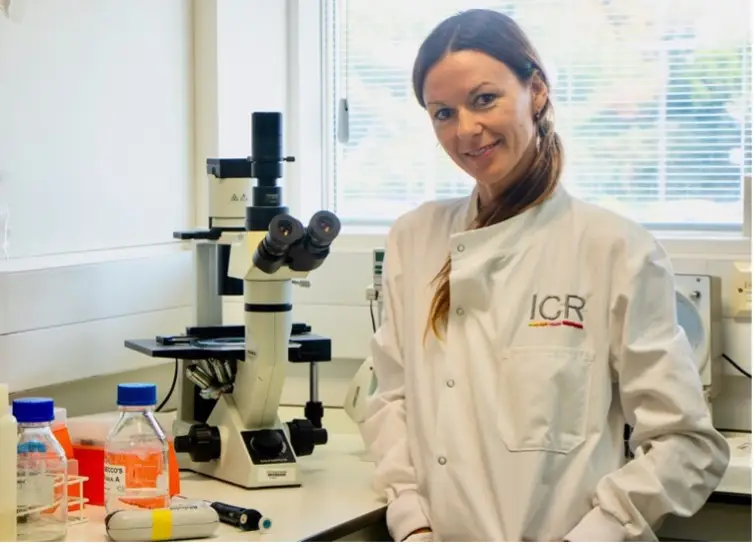
Dr Alejandra Bruna, Project Lead at The Institute of Cancer Research
